
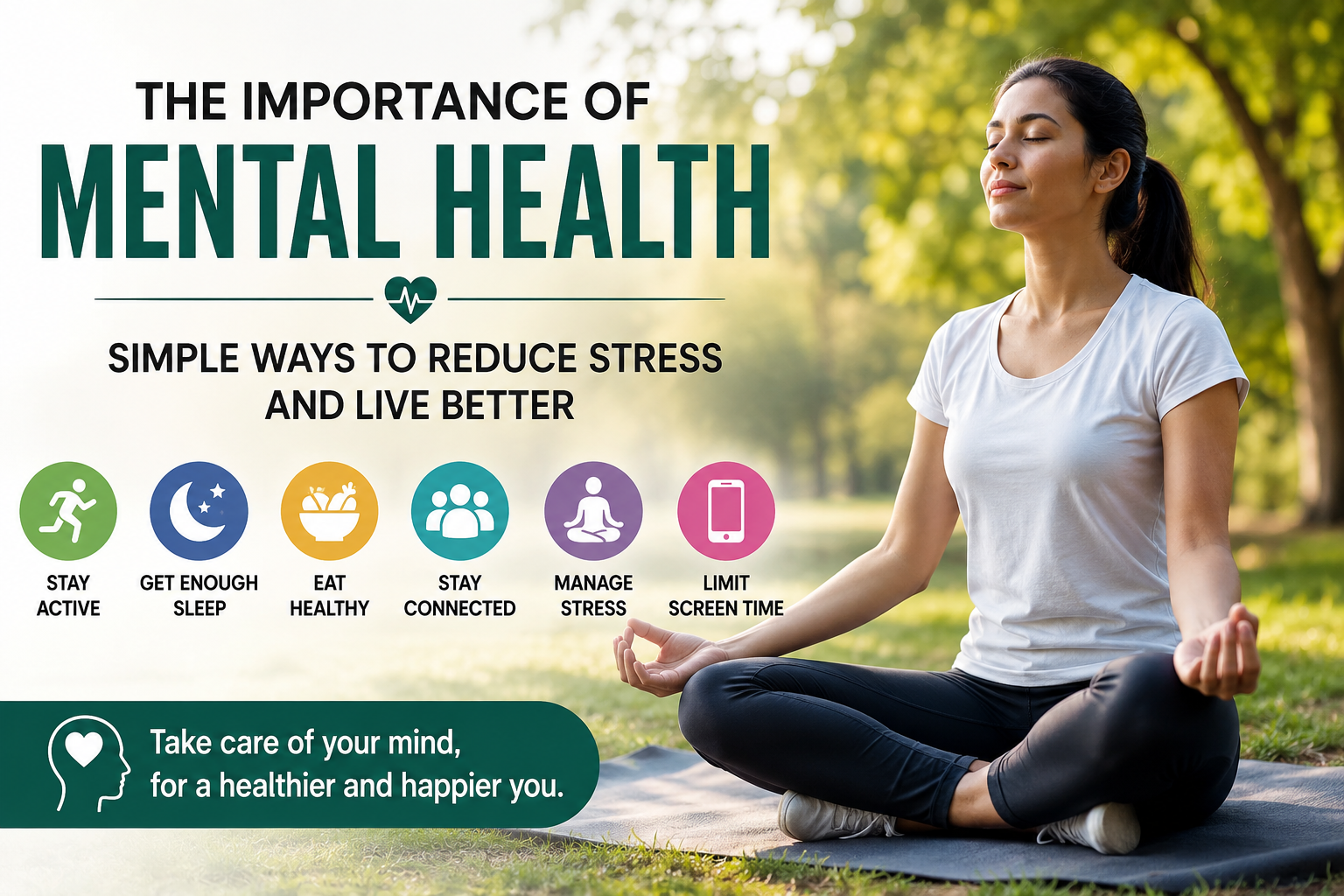
Mental health is just as important as physical health, yet it is often overlooked in our busy daily lives. Stress, anxiety, and depression can affect people of all ages, impacting relationships, work performance, and overall quality of life. Health experts emphasize that taking care of your mental well-being should be a regular part of a healthy lifestyle.
Understanding Mental Health
Mental health refers to emotional, psychological, and social well-being. It influences how people think, feel, and behave while helping them cope with life’s challenges.
Poor mental health can result from prolonged stress, financial pressure, lack of sleep, social isolation, or major life changes. Recognizing these factors early can help prevent more serious problems.
Common Signs of Stress
Some common symptoms of stress include:
- Feeling tired all the time
- Difficulty sleeping
- Frequent headaches
- Lack of concentration
- Feeling anxious or overwhelmed
- Changes in appetite
- Irritability and mood swings
If these symptoms continue for several weeks, it is important to seek professional advice.
Healthy Ways to Manage Stress
Health professionals recommend several simple habits to improve mental well-being:
1. Stay Physically Active
Regular exercise releases natural chemicals called endorphins that improve mood and reduce stress. Even a 30-minute walk each day can make a difference.
2. Get Quality Sleep
Adults should aim for 7–9 hours of sleep each night. A regular sleep schedule helps improve concentration, mood, and energy levels.
3. Eat Nutritious Foods
A balanced diet rich in fruits, vegetables, whole grains, and lean proteins supports both brain and body health.
4. Stay Connected
Spending time with family and friends can provide emotional support and reduce feelings of loneliness.
5. Practice Relaxation Techniques
Deep breathing, meditation, yoga, or simply spending time outdoors can help reduce stress and promote relaxation.
6. Limit Screen Time
Taking regular breaks from mobile phones and social media can reduce mental fatigue and improve focus.
When to Seek Professional Help
If stress, anxiety, or depression begins to interfere with daily life, it is important to consult a qualified healthcare professional. Early support can make recovery easier and improve long-term mental health.
Conclusion
Good mental health is essential for living a balanced and productive life. Small daily habits such as exercising, eating healthy, getting enough sleep, and staying connected with loved ones can significantly improve emotional well-being. Taking care of your mind is an important step toward a healthier future.