
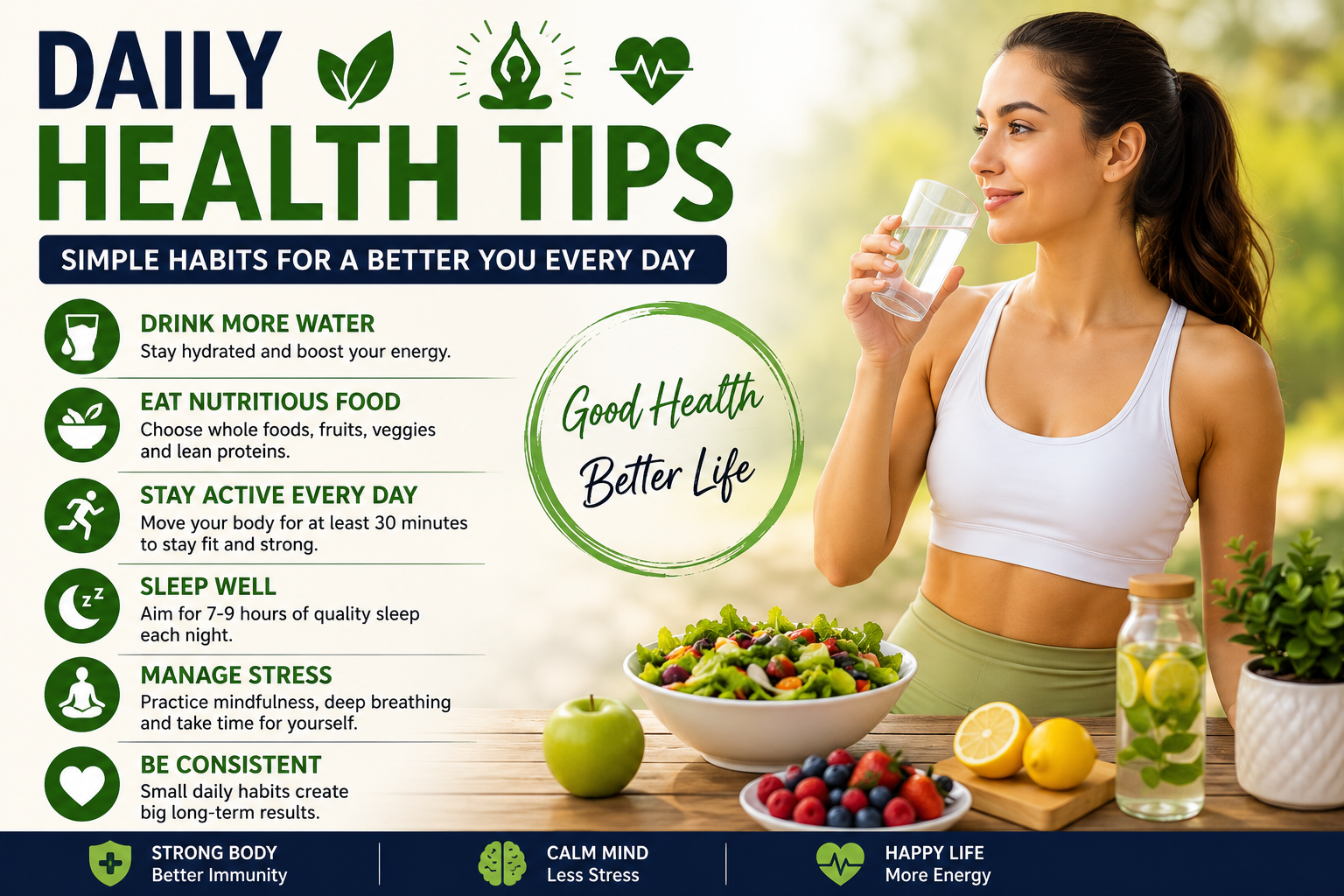
Good health is not built in one day. It comes from small daily habits that support your body, mind, energy, and long-term wellness. Many people think they need a strict routine, expensive products, or extreme lifestyle changes to become healthier. In reality, simple habits such as eating better, moving more, sleeping well, drinking enough water, and managing stress can make a big difference over time.
A healthy lifestyle does not mean being perfect every day. It means making better choices consistently. When your daily routine supports your health, you may feel more energetic, focused, active, and balanced.
Why Daily Health Habits Matter
Daily health habits matter because your body responds to what you do regularly. One healthy meal, one workout, or one good night of sleep can help, but long-term wellness comes from repeated positive actions.
The CDC notes that healthy eating, physical activity, optimal sleep, and stress reduction are important for overall health and healthy weight management as people age.
This means health is not only about diet or exercise. It is a complete lifestyle that includes food, movement, sleep, hydration, mental wellness, and daily routine.
1. Start Your Day with Water
Drinking water in the morning is a simple way to support your body after several hours of sleep. Water helps with digestion, temperature control, circulation, and normal body function.
Instead of starting your day with a sugary drink, try drinking a glass of water first. You can also add lemon, cucumber, or mint for flavor. This small habit can help you feel refreshed and may reduce the habit of reaching for sweet drinks early in the day.
2. Eat More Whole, Nutrient-Dense Foods
A healthy diet is one of the strongest foundations of good health. Focus on whole, nutrient-dense foods such as vegetables, fruits, whole grains, healthy fats, protein foods, and dairy options without added sugars.
The CDC explains that healthy eating means focusing on whole, nutrient-dense foods, including protein, vegetables, fruits, healthy fats, and whole grains.
Try to limit highly processed foods, sugary drinks, excess salt, fried snacks, and foods high in added sugar. You do not need to remove every favorite food, but your daily meals should mostly support your health.
3. Move Your Body Every Day
Physical activity is one of the best habits for better health. It supports your heart, muscles, bones, mood, weight, and energy. You do not need to go to the gym every day. Walking, cycling, dancing, stretching, swimming, and home workouts can all help.
Adults should aim for at least 150 minutes of moderate-intensity physical activity each week, along with muscle-strengthening activities at least 2 days per week, according to CDC guidance.
If you are busy, start small. A 10-minute walk after meals, taking stairs, stretching in the morning, or standing more during the day can help build momentum.
4. Prioritize Quality Sleep
Sleep is essential for physical and mental health. Poor sleep can affect mood, focus, hunger, energy, and recovery. Many adults try to work more by sleeping less, but over time, this can harm overall wellness.
NIH guidance says most adults need at least 7 hours or more of sleep each night, and the NHLBI notes that experts generally recommend 7 to 9 hours for adults.
To improve sleep, try going to bed at a consistent time, reducing screen time before bed, keeping your room comfortable, avoiding heavy meals late at night, and limiting caffeine in the evening.
5. Reduce Stress with Simple Relaxation Habits
Stress is a normal part of life, but too much stress can affect your body and mind. Daily stress may lead to poor sleep, overeating, low energy, headaches, and difficulty focusing.
Simple relaxation habits can help. Try deep breathing, prayer or meditation, journaling, walking outside, listening to calm music, or taking short breaks during work. Even five minutes of quiet time can help your mind reset.
6. Take Care of Your Mental Health
Health is not only physical. Mental health is also important for a balanced lifestyle. Your thoughts, emotions, relationships, and daily environment all affect your well-being.
Make time for activities that help you feel calm and positive. Talk to supportive people, reduce negative social media exposure, spend time outdoors, and take breaks when needed. If stress, sadness, anxiety, or sleep problems continue for a long time, it is a good idea to speak with a qualified health professional.
7. Build a Balanced Daily Routine
A healthy routine makes good choices easier. When your day has structure, you are more likely to eat on time, drink water, move your body, sleep better, and avoid unhealthy habits.
A simple healthy routine can include waking up at a consistent time, drinking water, eating a balanced breakfast, walking or exercising, taking short breaks, eating healthy meals, reducing screen time at night, and sleeping on time.
The goal is not to create a perfect routine. The goal is to create a realistic routine you can follow most days.
8. Avoid Sitting for Too Long
Many people spend hours sitting at a desk, in a car, or in front of a screen. Sitting for long periods can reduce movement and may affect energy levels.
Try standing up every 30 to 60 minutes. Walk for a few minutes, stretch your back and legs, or do simple movements near your desk. Small movement breaks can help your body feel more active throughout the day.
9. Limit Sugary Drinks and Processed Snacks
Sugary drinks and processed snacks can add extra calories without giving your body many useful nutrients. They may also make it harder to maintain steady energy and healthy weight.
Try replacing soda or sweet drinks with water, sparkling water, unsweetened tea, or fruit-infused water. For snacks, choose fruit, nuts, yogurt, boiled eggs, vegetables with hummus, or whole grain options.
10. Stay Consistent, Not Perfect
The most important health tip is consistency. You do not need to follow every habit perfectly. If you miss a workout, eat an unhealthy meal, or sleep late one night, simply return to your healthy routine the next day.
Small healthy actions repeated over time can create strong results. Focus on progress, not perfection.
Simple Daily Health Checklist
Drink enough water
Eat vegetables and fruits
Include protein in meals
Move your body for at least 20–30 minutes
Take breaks from sitting
Get 7–9 hours of sleep
Reduce sugary drinks
Manage stress with relaxing habits
Spend time away from screens
Stay consistent
Final Thoughts
Good health is the result of simple daily choices. Eating nutritious foods, staying active, sleeping well, drinking water, managing stress, and building a balanced routine can support better energy, fitness, mood, and long-term wellness.
You do not need to change your entire life overnight. Start with one or two habits, stay consistent, and slowly build a healthier lifestyle. Over time, these small steps can help you feel stronger, more active, and more in control of your health.
This article is for general information only and is not a replacement for medical advice. If you have a medical condition or major lifestyle change planned, speak with a qualified healthcare professional.
FAQs About Daily Health Tips
What are the best daily health tips?
The best daily health tips include drinking enough water, eating whole foods, moving your body, sleeping well, managing stress, and limiting sugary or highly processed foods.
How much exercise do adults need every week?
Adults should aim for at least 150 minutes of moderate-intensity physical activity each week and muscle-strengthening activities at least 2 days per week.
How many hours should adults sleep?
Most adults need around 7 to 9 hours of sleep per night for better health, energy, and recovery.
How can I start living healthier?
Start with small habits. Drink more water, walk daily, add vegetables to meals, sleep on time, and reduce sugary drinks.
Is walking good for health?
Yes, walking is a simple and effective form of physical activity. It can support heart health, weight management, mood, and overall fitness when done regularly.